Quick answer
Store at least 1 gallon of water per person per day. To make water safe, boil it for 1 minute (3 minutes above 6,500 feet), or add 8 drops of 6% unscented bleach per gallon and wait 30 minutes.
Water sources
Plan on far more water than drinking water alone once you include cooking, washing, and laundry. For drinking and basic needs, store at least 1 gallon per person per day, and aim for a 2-week supply.[1] Livestock need much more. Amish farms usually rely on a well, plus a windmill or engine to lift the water into a raised tank. Gravity then carries it to the house and barn.
| Method | How it works | Cost and effort | Best for |
|---|---|---|---|
| Windmill pump | Wind turns a wheel that drives a pump rod down the well. Water fills a raised tank or cistern | High upfront cost, then low running cost. Needs regular greasing and new pump leathers from time to time | Open, windy land, including deep wells |
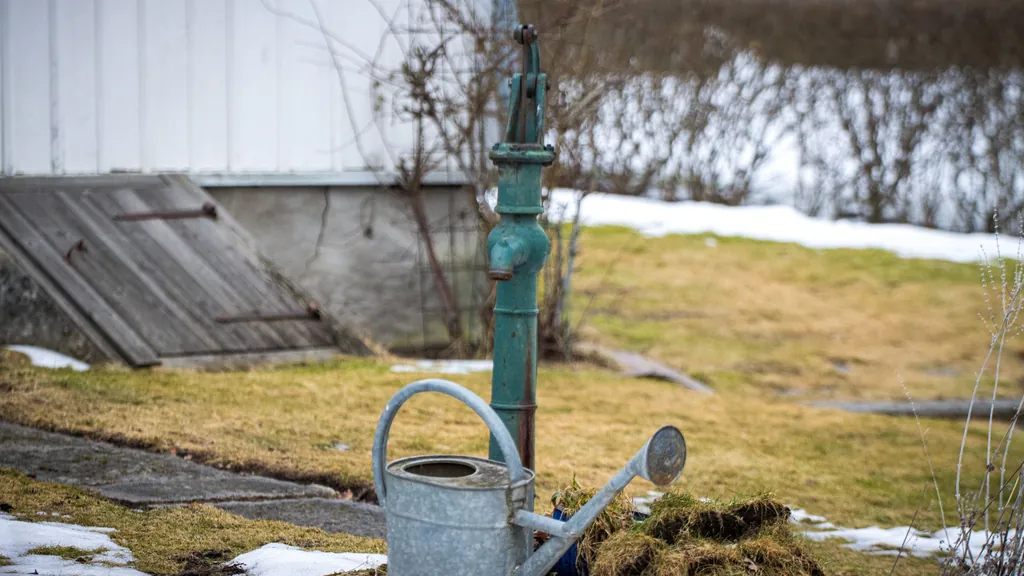
| Hand pump | A pitcher pump lifts water only from a shallow well. A deep-well hand pump reaches much deeper | Low cost. Slow but steady | Backup for every well. Every home with a well should have one |
| Gravity-fed tank or spring | Put the tank or spring box higher than the house. The bigger the drop, the stronger the pressure | Cheap to run, no moving parts | Hilly land. A plumber can tell you how high the tank must sit for the pressure you want |
| Hydraulic ram pump | A stream's flow pushes a part of its water uphill, with no fuel | Low cost, runs day and night for years | Land with a creek that falls a few feet |
| Engine pump | A small gas or diesel engine fills the tank a few times a week. Run it outdoors only[2] | Fuel cost, but fast | Large farms with livestock |
| Rain catchment | Gutters feed barrels or a cistern. Divert the first flush of dirty water | 1 inch of rain on 1,000 sq ft of roof gives about 620 gal[3] | Every home, as a main or backup supply. Treat it before drinking[3] |
Protect the well. Keep outhouses, manure piles, animal pens, fuels and chemicals well away from the well, and downhill from it. Your local health department can tell you the safe distance.[4] Seal the wellhead with a well cap or sanitary seal.[4]
Winter. Bury water lines below the frost line. Its depth depends on where you live, so ask your county building office. Drain the pumps, and keep a hole open in livestock troughs or use an insulated tank.
Making water safe
Test a private well at least once a year for total coliform bacteria, nitrates, total dissolved solids and pH.[5] Treat any surface water, rainwater, or spring water before you drink it. Amish families who drink well water face the same rule as any well owner: test it, and keep it well away from manure.
- Settle and strain. If the water is cloudy, let it settle. Then filter it through a clean cloth, paper towel or coffee filter.[6]
- Filter. To remove parasites, a filter needs a pore size of 1 micron or smaller. To remove bacteria, it needs 0.3 micron or smaller. Most filters do not remove viruses, so disinfect the water as well.[6]
- Disinfect, using one of these methods:
- Boil: Bring clear water to a rolling boil for 1 minute, or 3 minutes above 6,500 feet.[6] The wood cookstove can do this while you cook.
- Bleach: Use plain, unscented bleach that lists 6% or 8.25% sodium hypochlorite. Add 8 drops of 6% bleach or 6 drops of 8.25% bleach per gallon, and double it if the water is cloudy, colored, or very cold. Stir and wait 30 minutes. The water should have a slight chlorine smell. If it does not, repeat the dose and wait another 15 minutes.[7]
- Sun: Fill clear plastic bottles with clear water and lay them on their sides in the sun for 6 hours, or 2 days if the sky is cloudy. This method does not work well with cloudy water.[6]
- Store. Keep water in clean, food-grade containers with tight lids, in a cool place out of direct sunlight. Replace stored water every 6 months.[1]
Testing. Your local health department can tell you what else to test for in your area, and a state-certified lab can do the testing.[5] Test again after flooding near the well and whenever the taste, color or smell changes.[5]
Hot water and bathing
In an Amish home, hot water comes from whatever is already burning. The cookstove's reservoir holds several gallons and heats all day while you cook. Some homes also have a propane water heater with a standing pilot light, a type that can run without electricity. Any gas water heater must be vented properly.[2]
- Stove reservoir: Dip from it for dishes, washing up, and topping up the bath.
- Copper or iron kettle on the wash-house stove: Heats a big batch for laundry day and butchering.
- Wash-day boiler: Fire it once a week for laundry and baths.
- Solar: A black hose coil or a black-painted tank on a south-facing roof gives warm water from spring to fall.
- Bathing: Take a sponge bath at the washstand on most days. Use a tub by the stove for a weekly full bath. A gravity bag shower works well in summer.
- Saving fuel: Heat only what you need and cover pots. Wash dishes in one hot tub and rinse in a second.
Toilets, greywater, and waste
The vast majority of Amish homes have indoor bathrooms, while members of the most traditional groups use outhouses.[8] A flush toilet fed by a gravity tank and draining to a septic system needs no power. Choose whichever your land and local health codes allow, and check your county rules before you dig.
| System | How it works | Upkeep |
|---|---|---|
| Gravity flush toilet + septic | Water comes from a raised tank. Waste flows by gravity to the septic tank and drainfield | Household tanks are typically pumped every 3 to 5 years, and inspected at least every 3 years.[9] No power needed |
| Outhouse (pit privy) | A pit under a vented shed. Add a scoop of wood ash or lime after each use | When it is nearly full, cover it with soil and move the shed. Follow your county's rules |
| Bucket composting toilet | A 5-gallon bucket under a seat. Cover each use with sawdust or peat. Empty into a dedicated compost bin | Compost it a long time, use it only on non-food plants, and check your state and county rules first |
Placement rules. Put an outhouse well away from any well or stream, downhill from the water source, and above the water table. Your county health department sets the distance.
Greywater. Dish and wash water can go to a mulch basin around fruit trees. Use plain soap, such as homemade lye soap. Do not use it on vegetables you eat raw.
Trash. Amish households make little trash. Food scraps go to the hogs, hens, or compost. Plain newspaper helps start the stove, but never burn household trash, cardboard, plastics or glossy printed paper in it.[10] Glass jars get reused. Metal goes to a scrap dealer.
Hygiene keeps you well. Wash your hands with soap after the toilet and before cooking. Keep a washbasin and towel by the door. Without running water, germs from waste and untreated water are one of the biggest everyday health risks.
The modern backup
The modern version of all this is simple. Store at least 1 gallon of water per person per day for as long as you can, ideally 2 weeks, and replace it every 6 months.[1] Keep a filter and a bottle of plain, unscented bleach so you can treat more.
- What to do when the power goes out: water, food and heat for the first three days.
- How to keep pipes from freezing: protect your water lines before a cold snap.
- Winter storm checklist: what to have on hand before the storm.
Common questions
How long do I need to boil water to make it safe?
Bring clear water to a rolling boil for 1 minute. Above 6,500 feet, boil it for 3 minutes.[6] If the water is cloudy, let it settle and filter it through a clean cloth first.
How much bleach do I add to a gallon of water?
Use plain, unscented bleach. Add 8 drops of 6% bleach or 6 drops of 8.25% bleach per gallon, and double that for cloudy, colored or very cold water. Stir and wait 30 minutes before drinking.[7]
How often should I test my well water?
Test a private well at least once a year for total coliform bacteria, nitrates, total dissolved solids and pH.[5] Test again after nearby flooding or any change in taste, color or smell.
How long can I keep stored water?
Keep it in clean, food-grade containers with tight lids, in a cool place out of direct sunlight, and replace it every 6 months.[1]
Sources
- How to Create an Emergency Water Supply Centers for Disease Control and Prevention (CDC), accessed November 14, 2026
- Carbon Monoxide Poisoning Basics Centers for Disease Control and Prevention (CDC), accessed November 14, 2026
- Beginner rainwater harvesting system tips Texas A&M AgriLife, accessed November 14, 2026
- Protect Your Home's Water U.S. Environmental Protection Agency (EPA), accessed November 14, 2026
- Guidelines for Testing Well Water Centers for Disease Control and Prevention (CDC), accessed November 14, 2026
- How to Make Water Safe in an Emergency Centers for Disease Control and Prevention (CDC), accessed November 14, 2026
- Emergency Disinfection of Drinking Water U.S. Environmental Protection Agency (EPA), accessed November 14, 2026
- Diversity Young Center for Anabaptist and Pietist Studies, Elizabethtown College (Amish Studies), accessed November 14, 2026
- How to Care for Your Septic System U.S. Environmental Protection Agency (EPA), accessed November 14, 2026
- Best Wood-Burning Practices U.S. Environmental Protection Agency (EPA), Burn Wise (archived program site), accessed November 14, 2026
How this guide was made
This guide was drafted with AI writing tools, working from common Amish practice and the sources listed on this page. A separate fact-checking pass opened every cited source and checked each number, threshold and instruction against it; anything a source did not support was rewritten or removed. This page was reviewed by Marcus L. Barber on November 15, 2026. The photo is a licensed stock photo from Pexels (credit under the photo). It is not a photo of Marcus's home.
Amish practice varies by church district, and no Amish community or person has endorsed this guide or any product mentioned on this site.
This page has not been reviewed by a licensed electrician or food-safety professional. See our editorial standards. Spot an error? Email partners@digitalsolomon.com.